


When Men Join the Fight for Gender Equality in the Southeast
From a widow’s right to live without accusations to a woman’s place in a traditional cabinet, community leaders in the Southeast are beginning to question practices that have kept women silent and excluded.
By Monday Osasah
Engr. Chinedu Stephen knows that one day, his wife could become a widow.
That thought brings the treatment of widows in his community painfully close to home. The women facing accusations, deprivation, and discrimination today are someone’s wives and mothers. Tomorrow, his own family could face the same experience.
“As a man, I have a wife and daughters, and I will die one day. I would not want them to experience these things,” he said.
When he became President General, he noticed how widows were denied opportunities and subjected to allegations. He reports that his leadership has acted to stop those practices.
His declaration is direct: “I am a proud feminist.”
For a community leader, those words carry responsibility. They raise a question that reaches beyond his household: what should a man do when the customs he has inherited expose women to harm?
It is a question being taken into communities through the Male Feminists Network (MFN) project, implemented by the African Centre for Leadership, Strategy & Development (Centre LSD). In the Southeast, its partner, Neighbourhood Environmental Watch (NEW Foundation), is encouraging men to examine their roles in preventing gender-based violence and advancing women’s rights.
The testimonies emerging from these engagements reveal a struggle over everyday experiences: who can leave the house, who can own land, who can speak at a meeting, and whose opinion counts.
When a Masquerade Stands Between a Woman and Healthcare
In Amangwu Obuofia, an autonomous community in Nkanu West LGA, a restriction on women’s movement during masquerade appearances had consequences that extended into maternal healthcare.
According to Hon. Arinze Ogbodo, Chairman of the Presidents General in Enugu State, women could not come outside when the masquerade was out. A woman needing to attend an antenatal appointment could therefore find herself unable to leave.
For the woman concerned, the issue was immediate. Her need for care had to contend with a community rule.
Ogbodo explained that the matter was discussed with the Igwe, and the practice changed.
His account shows why engaging traditional leaders matters. Their authority can help communities reconsider rules that have long been accepted, even when those rules place unequal burdens on women.
“No society can make progress without embracing equality,” he said.
The Elder Sister Behind My Success
Ogbodo’s belief in women’s contributions has roots in his own family.
He grew up among nine children. The eldest was a girl, and he credits his elder sister with helping shape the family’s progress.
“My success story is traceable to my elder sister. Her contribution was instrumental to our growth and success,” he recalled.
That acknowledgement gives a personal foundation to his advocacy. He has experienced the value of a woman’s support and leadership. The challenge is to extend that recognition into institutions where women have often been denied influence.
As chairman of the Presidents General, he has a platform for doing so. He described a network of 583 autonomous communities whose leaders work with government on local policies, programmes and projects.
He reported that women had been co-opted into town union executive committees and that community sensitisation was continuing. He also cited women’s ownership of land as evidence of change.
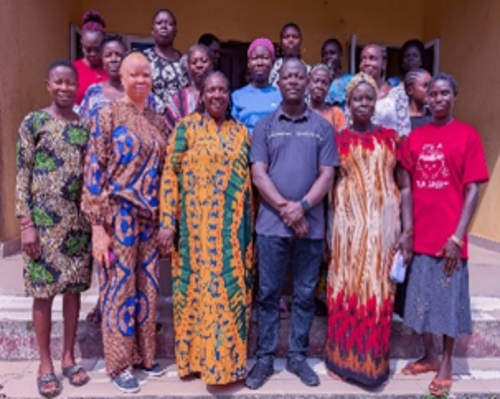
“Before MFN, it was not easy, but a lot has changed. That is why I invited some of the Presidents General,” he said.
His testimony points to the potential reach of male allyship: a leader’s willingness to question exclusion can create opportunities for discussion across many communities.
One Woman in a Room Full of Men
For Barr. Peace Chidi Ugwu, entering the traditional cabinet meant finding her voice in a space where she was the only woman.
Her involvement in community affairs had grown from her father’s example and her own attachment to her community. People who observed her contributions encouraged her to serve. Her legal work subsequently helped earn the confidence of the Igwe and his council.
Admission into the cabinet, however, did not immediately bring comfort.
“I was not comfortable because of the disposition of some of the men,” she recalled.
The Igwe’s support mattered. So did her professional knowledge.
She described listening while the men spoke, then presenting her position through the law. Gradually, her expertise gave weight to her contributions.
Now serving as council secretary and legal adviser, she says she is consulted in preparing judgments and has become someone women approach for support.
“I bring a woman’s perspective into the decisions,” she said.
That perspective matters in a setting where decisions can affect families, property, relationships and community obligations. Women need opportunities to explain how those decisions affect their lives.
Ugwu’s account also reveals the pressure that can fall on the first woman admitted into an institution. Her performance becomes closely watched, sometimes treated as a test of whether other women deserve a place.
She believes her work helped create confidence in women’s participation. Five more women, she reported, have since been admitted into the cabinet.
“I feel satisfied that five more women have been admitted,” she said.
Their presence offers the possibility of a different experience for the next woman who enters.
“If a woman comes in, seeing me makes a lot of difference.”
Her experience provides a local example for the wider inclusion that MFN promotes. It shows what can happen when institutional support gives women room to contribute—and when that contribution creates space for others.
From Recognition at Home to Rights in the Community
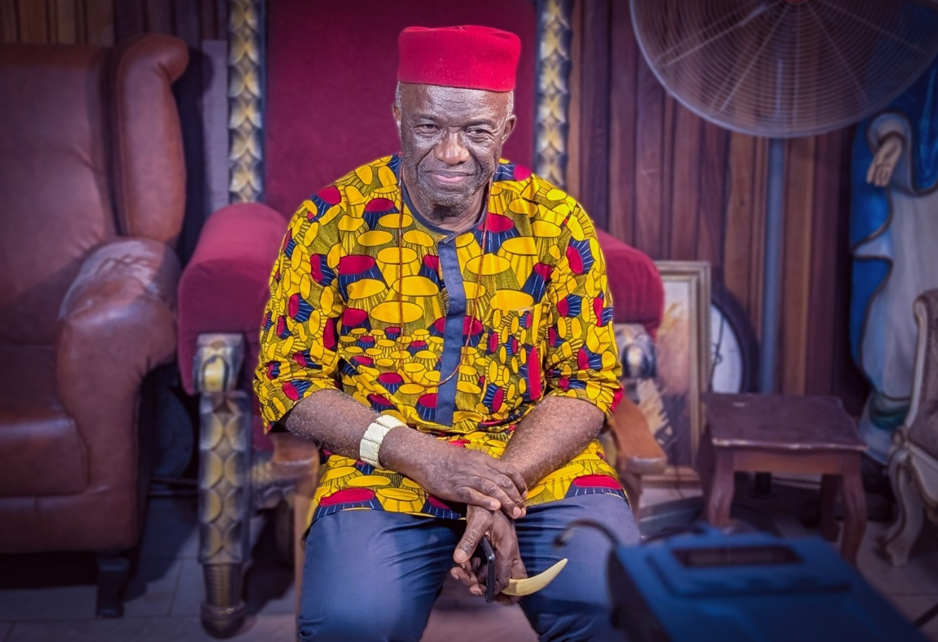
Ozo Prince Uche Ayalagu, a farmer and community leader from Ngwo Asaa, already knew from his family life that women had much to offer. Engagement with NEW Foundation prompted him to examine whether community governance reflected that knowledge.
“When NEW Foundation came, it struck me that we were not doing well in terms of women’s inclusion in decision-making,” he said.
The admission is significant. Change requires leaders to recognise shortcomings in institutions they help sustain.
He reported that the community constitution had been made inclusive and that women could contribute during cabinet meetings.
“When opportunities are given, they make very meaningful contributions,” he said.
He also offered a basic reason for inclusion: “Women are human beings.”
That recognition places women’s participation on firm ground. Their rights should not depend on exceptional performance or the goodwill of individual leaders.
Ayalagu sees shared responsibility within the household as a lesson for community life.
“We make the home better when we give opportunities for women’s contributions,” he said.
Hon. Isaac Onyia, President General of Ngwo Asaa, drew a similar lesson from his church.
“In my church, women are performing well. If we use the same strategy in the community, we would achieve a better goal.”
Both men point to a contradiction worth confronting: communities benefit from women’s work in some spaces while limiting their influence in others.
Carrying the Conversation Beyond the Palace
NEW Foundation has taken the MFN message beyond meetings with traditional authorities.
Its activities have reached motorcycle and tricycle riders, university students, male traders, community youths and teachers. Radio phone-in programmes have opened the discussion to listeners, while jingles in English, Nigerian Pidgin and Igbo have carried the message across language groups. School clubs provide opportunities to engage young people.
These different spaces matter because attitudes towards women are reinforced through daily interactions—in homes, classrooms, markets, religious gatherings and conversations among friends.
Prince Oliver Okuozo, a father of four daughters, said the message was being carried into communities across Enugu State.
Ugochukwu Eze reported that women’s participation in elections in Abia town had changed under his leadership. Ejike Iloh credited MFN training with contributing to peace across the five local government areas of Enugu West.
Emeka Nnaji described gender equality as giving women and men a level playing field.
“Men should take gender equality seriously and spread it,” he said. “I am a male feminist.”
Keeping the Gate Open
The accounts from the South East describe changes that deserve attention: a restriction on women’s movement reconsidered, widows’ treatment challenged, community rules made more inclusive, and additional women admitted into a traditional cabinet.
They are testimonies from participants and leaders. Their lasting significance will be seen in women’s everyday experiences—whether they can access healthcare freely, retain their rights after bereavement, participate in elections and influence decisions without fear or dismissal.
For Centre LSD and NEW Foundation, sustaining the work means helping communities turn commitments into practices that endure beyond individual officeholders.
Stephen’s concern for his wife and daughters brings that responsibility into focus. Ugwu’s presence in the cabinet shows what an opening can make possible. The admission of five more women suggests how that opening can widen.
Across these communities, men are being asked to consider what their authority makes possible for others. The answer will be measured in the freedom, safety, and voice women can exercise in their own lives.
Monday Osasah is the Executive Director of Centre LSD.


