INTERIM REPORT ON THE EKITI STATE GOVERNORSHIP ELECTION HELD ON 20 JUNE 2026
Preamble
The Ekiti State Governorship Election was conducted on 20 June 2026 across the sixteen (16) Local Government Areas of the State, with thirteen (13) political parties participating in the electoral contest. As part of its commitment to promoting credible, transparent, and democratic electoral processes in Nigeria, the African Centre for Leadership, Strategy and Development (Centre LSD), in collaboration with the Nigerian Civil Society Situation Room, deployed trained observers to selected polling units across the three Senatorial Districts of Ekiti State. The objective was to independently monitor the conduct of the election and provide real-time assessments of compliance with electoral procedures and standards. This interim report presents key observations from the accreditation, voting, and general electoral process.
Key Findings
1. Deployment of INEC Personnel and Election Materials Generally, the Independent National Electoral Commission (INEC) demonstrated commendable logistical preparedness in most of the polling units observed. Election officials and materials arrived early in many locations, enabling the timely commencement of accreditation and voting. At Polling Unit 009, Agbado-Ekiti, INEC officials arrived at approximately 7:15 a.m., while security personnel arrived around 7:30 a.m. The Presiding Officer was observed briefing voters before the commencement of the exercise. Similarly, at Polling Unit 006, Odo-Ise I Ward, Ise/Orun Local Government Area, election officials arrived with the required voting materials, and the polling unit was properly arranged before voting commenced. Voters were already present to verify their names on the voters� register. However, observers noted the absence of assistive devices such as Braille ballot guides and magnifying glasses for persons with visual impairments.
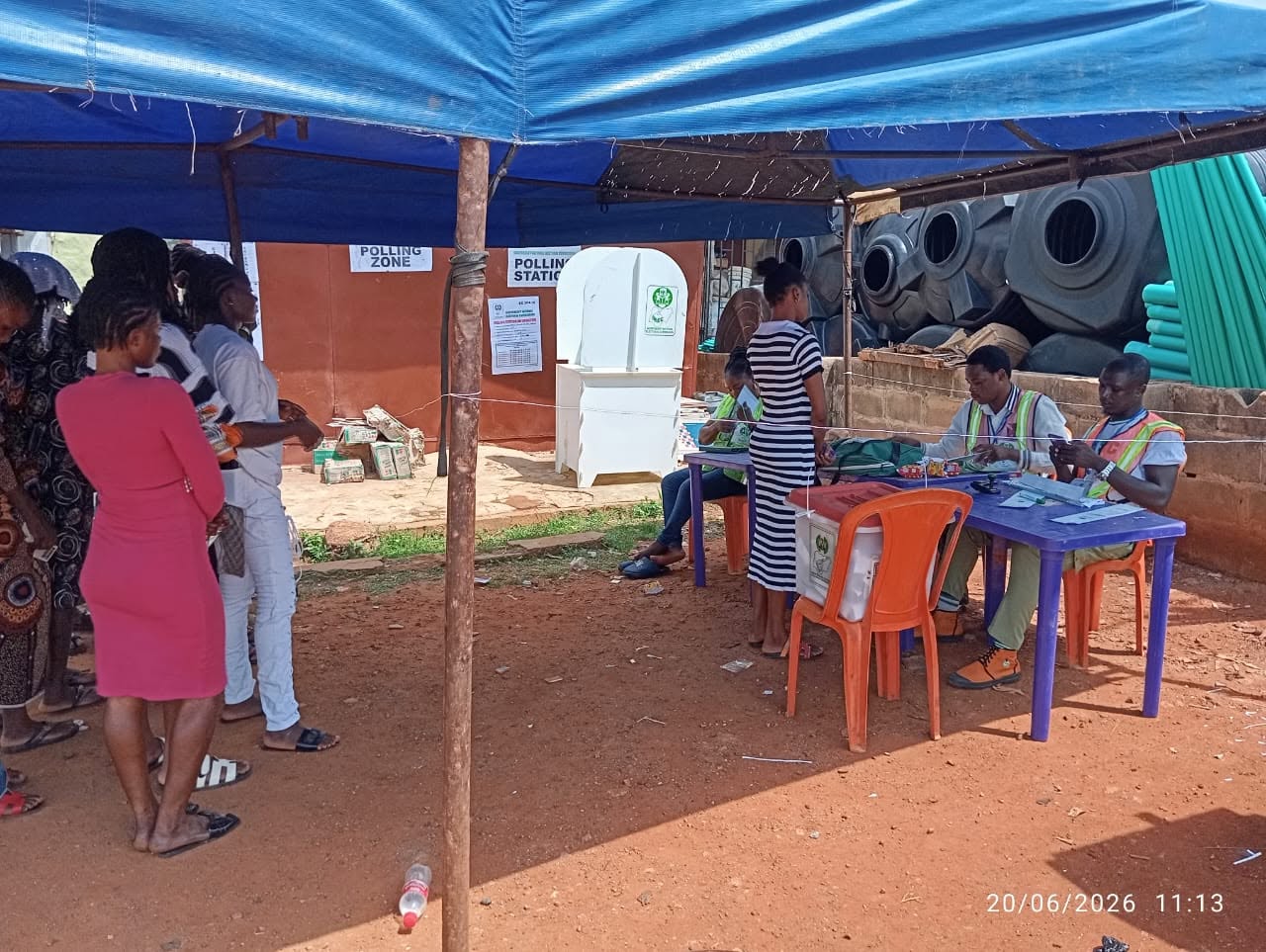
2. Accreditation and Voting Process Accreditation and voting were conducted simultaneously in line with INEC guidelines and commenced promptly in most polling units observed. In Odose Ward, Polling Unit 001, accreditation commenced at approximately 8:30 a.m. Likewise, at Upper Emmanuel Nursery and Primary School, Agbado-Ekiti (Ward 06, Polling Unit 009), voting commenced at about 8:35 a.m. following the arrival and setup of election officials. At Polling Unit 013, Olaoluwa Muslim Grammar School, election officials arrived early and accreditation began at 8:30 a.m. after voters were addressed by the Presiding Officer. Observers noted that priority was given to elderly persons and persons with disabilities. Overall, the accreditation and voting process was orderly and largely adhered to established procedures.
3. Voter Turnout Observers recorded varying levels of voter turnout across polling units. While some polling units witnessed significant voter participation, others experienced relatively low turnout. For example, a considerable number of accredited voters were observed at Odose Ile-Aro Ward 11 by 11:26 a.m. Similarly, Polling Unit 002 in Ward 10, Ado-Ekiti, recorded a notable turnout of voters. Despite these pockets of active participation, voter apathy remains a concern requiring sustained civic engagement and voter education.
4. Secrecy of the Ballot Observers noted that voting cubicles were provided in the polling units visited, ensuring that voters could cast their ballots in secrecy. Polling officials generally made deliberate efforts to position voting cubicles appropriately to protect the confidentiality of voters� choices.
5. Security Arrangements The election environment was generally peaceful across the polling units observed. Security personnel were visibly present and conducted themselves professionally. For instance, four police officers were present at Polling Unit 013, Olaoluwa Muslim Grammar School before voting commenced. At Polling Unit 006, Odo-Ise I Ward, Ise/Orun Local Government Area, six security personnel comprising officers of the Nigeria Police Force and the Nigeria Security and Civil Defence Corps (NSCDC) were deployed to maintain order. The presence of security personnel contributed significantly to the peaceful conduct of the election.
6. Presence of Party Agents Party agents were present in most polling units observed and actively monitored the electoral process. However, observers noted that not all political parties participating in the election had representatives present at every polling unit.
7. Vote Buying and Voter Inducement While polling officials generally ensured voter secrecy, observers received reports of suspicious activities suggestive of vote buying and voter inducement in some locations. Allegations of monetary inducement were reported at Polling Unit 005, Ijero Ward D, and in some polling units in Agbado-Ekiti. Reports indicated that some voters were allegedly encouraged to display their marked ballot papers to party agents or designated individuals before depositing them into the ballot box as evidence of their voting preference. These reports raise concerns about attempts to compromise the integrity of the electoral process and warrant further investigation by relevant authorities.
8. Inclusion and Preferential Treatment for Vulnerable Groups Observers noted positive efforts by election officials to prioritize vulnerable groups, including elderly persons, pregnant women, and persons with disabilities. At Polling Unit 002, Ado-Ekiti, Odose Ile-Aro Ward 11, and Polling Unit 013, elderly voters and other vulnerable persons were allowed to vote ahead of others, thereby facilitating their participation in the electoral process.
9. Challenges Observed The following challenges were observed during the election:
I. Delayed arrival of election officials and materials in a few polling units.
II. Absence of assistive facilities and materials for persons with disabilities in some polling units.
III. Inadequate deployment of security personnel in certain locations.
IV. Reported incidents of vote buying and voter inducement.
V. Low voter turnout in some polling units, indicating persistent voter apathy.
10. Recommendations Based on the observations made, Centre LSD recommends the following:
I. Improved Electoral Logistics: INEC should strengthen its logistical arrangements to ensure the timely deployment of personnel and election materials to all polling units.
II. Enhanced Accessibility for Persons with Disabilities: INEC should ensure the provision of assistive materials and facilities, including Braille ballot guides and magnifying devices, to promote inclusive participation.
III. Adequate Security Deployment: Security agencies should ensure sufficient deployment of personnel across all polling units to maintain order and deter electoral malpractice.
IV. Address Vote Buying and Voter Inducement: INEC, security agencies, and anti-corruption institutions should intensify efforts to prevent, investigate, and prosecute cases of vote buying and voter inducement.
V. Strengthen Voter Education: Stakeholders should increase voter education and civic engagement efforts to address voter apathy and encourage greater participation in future elections.
11.Conclusion Based on observations from the polling units monitored, the Ekiti State Governorship Election was generally peaceful, and the accreditation and voting processes were conducted in an orderly manner. However, concerns relating to voter apathy, accessibility for persons with disabilities, and reports of vote buying remain areas requiring attention. The outcome of this election will depend not only on the conduct of voting but also on the confidence of citizens in the Independent National Electoral Commission (INEC) as the electoral umpire to ensure a free, fair, transparent, and credible process. Other critical stakeholders, including security agencies, political parties, party agents, candidates, and all sons and daughters of Ekiti State, also have important roles to play in safeguarding the integrity of the electoral process.
Centre LSD will continue to monitor developments and will issue a comprehensive post-election assessment report in due course. The Centre wishes the people of Ekiti State a peaceful, free, fair, and credible electoral process.
Monday Osasah
Executive Director
African Centre for Leadership, Strategy & Development, Centre LSD
Share this post


