


The African Centre for Leadership, Strategy and Development (Centre LSD) has strengthened efforts to advance gender equality and prevent gender-based violence (GBV) through a capacity-building programme for Women’s Rights Organisations focused on effectively engaging men as allies.
The programme was organised under the Male Feminists Network (MFN) project, a two-year national initiative implemented by Centre LSD with support from the Ford Foundation. The project seeks to mobilise men and boys to challenge harmful gender norms, promote positive masculinity, hold other men accountable and use their influence to support gender justice and women’s rights.
Strengthening Engagement with Male Allies
The two-day programme, titled “Capacity Building for Women’s Rights Organisations on Engaging Male Allies,” brought together women-led and feminist organisations from different parts of Nigeria.
The convening provided a platform for participants to strengthen their knowledge and approaches to working with male allies in ways that remain grounded in feminist principles, accountability and respect for women’s leadership.
In his welcome remarks, the Executive Director of Centre LSD, Mr. Monday Osasah, explained that the Male Feminists Network project is designed to advance feminist principles, challenge toxic masculinity and strengthen the involvement of men and boys in preventing gender-based violence.
He stressed that feminism should be understood within the broader pursuit of justice, dignity and human rights.
Mr. Osasah also drew attention to the complexities associated with male allyship, noting that engaging men must be approached carefully to ensure that existing inequalities and power imbalances are not unintentionally reproduced.
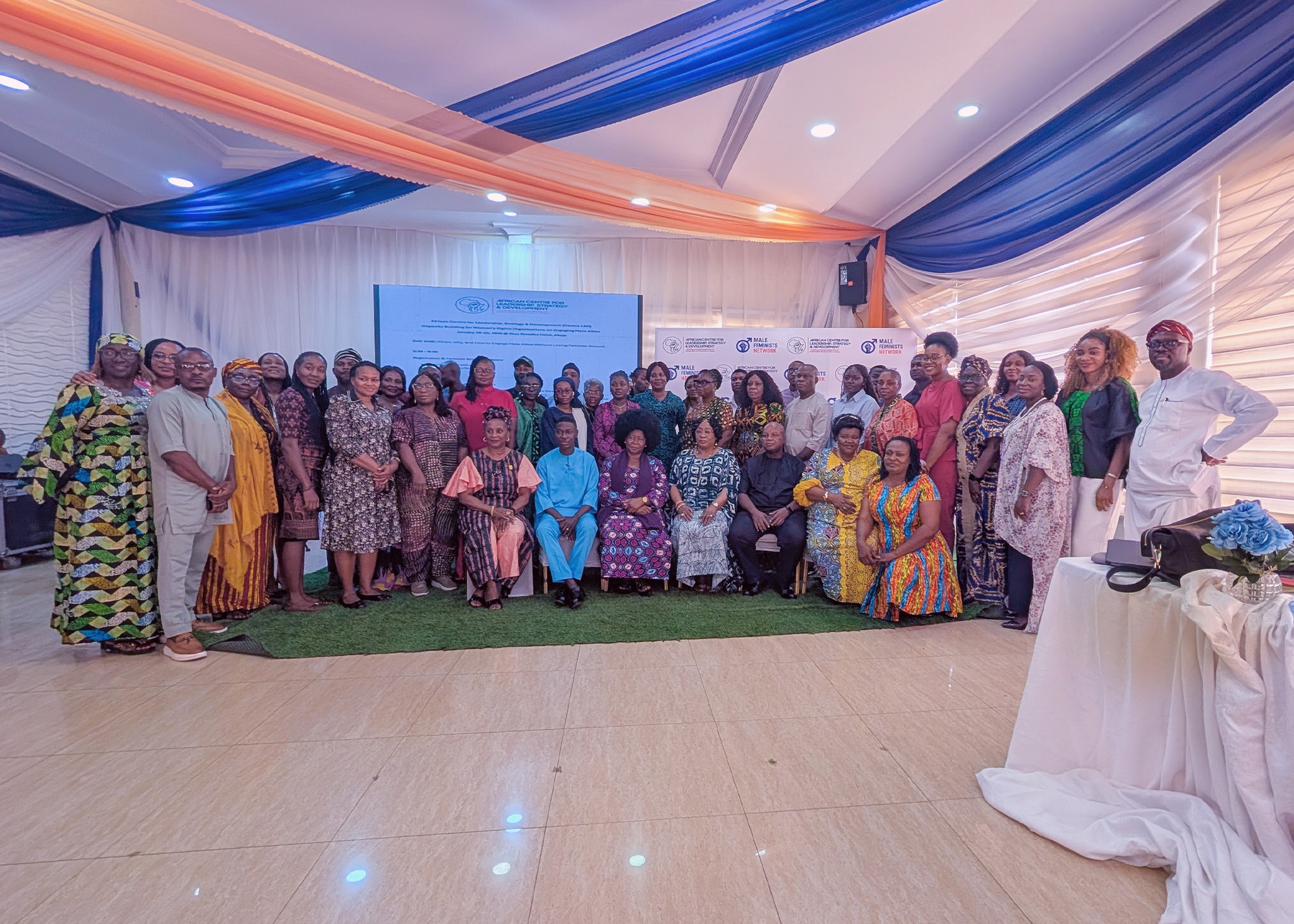
The convening therefore provided an opportunity for honest reflection, learning and the development of more accountable strategies for engaging men.
Supporting, Not Replacing, Women’s Movements
Speaking during the programme, the Project Director of the Male Feminists Network, Dr. Otive Igbuzor, emphasised that the involvement of men in advancing gender equality should strengthen the work of women’s movements rather than compete with or replace them.
He noted that patriarchal practices are often sustained through systems and structures dominated by men. Addressing these inequalities therefore requires men to critically examine and change their attitudes, behaviours and the ways in which they exercise power.
Building a Growing Network for Change
The Male Feminists Network project has recorded several milestones in its efforts to strengthen male participation in GBV prevention and gender equality.
These include the development of a national training manual on Male Feminism in Support of GBV Prevention in Nigeria, as well as the introduction of an online course dedicated to male feminism and the prevention of gender-based violence.
At the time of the programme, the online course had attracted 8,552 participants, with 3,150 Nigerians successfully completing the course and receiving certification.
Beyond completing the training, participants are expected to translate their learning into action by promoting conversations around gender equality within their communities, challenging harmful gender norms and supporting initiatives that advance the rights of women and girls.
The initiative is also helping to broaden understanding of feminism among men, particularly by addressing misconceptions that portray feminism as being opposed to men rather than as a movement concerned with equality, justice and human dignity.
Sustaining the Movement
Centre LSD, through the Male Feminists Network project, will continue to expand opportunities for digital learning, strengthen engagement with traditional and religious leaders and advance policy advocacy around gender equality and the prevention of gender-based violence.
The approach places emphasis on building responsible and accountable male allies rather than positioning men as the central figures in the struggle for gender justice.
With support from the Ford Foundation and collaboration with six zonal partners representing Nigeria’s six geopolitical zones, the Male Feminists Network continues to build a nationwide platform of men committed to challenging harmful patriarchal norms, preventing gender-based violence and supporting women-led efforts towards a more just and equitable society.


